






Chinese New Year Traditions Explained: Red Envelopes, Lions, and Firecrackers

Share
The drums are beating, the air smells of gunpowder and dumplings, and the world is painted in brilliant shades of red. As we approach the Year of the Fire Horse in 2026, understanding the deep spiritual logic behind Chinese New Year traditions is the key to unlocking a year of prosperity.
For over 3,000 years, the Lunar New Year (Spring Festival) has been the most significant event in the Chinese cultural calendar. But to the uninitiated observer, the flurry of activities can seem chaotic. Why are people hanging diamond-shaped papers upside down? Why is there a taboo against washing your hair? And what is the real difference between a Lion Dance and a Dragon Dance?
These are not merely colorful festivities; they are ancient algorithms for luck. Chinese New Year traditions are a complex system of symbolic actions designed to banish the stale energy (Qi) of the past year and invite fresh, auspicious energy for the future.
In 2026, we welcome the Year of the Fire Horse. The Horse represents speed, energy, and victory. The Fire element amplifies this, promising a year of volatility and passion. This makes adhering to tradition even more critical this year—you want to harness this powerful Fire energy, not get burned by it. This ultimate guide will walk you through every ritual, rule, and taboo you need to know.
The Legend of Nian: Why We Do What We Do
To understand the "Why" behind Chinese New Year traditions, we must go back to the beginning. The mythology of the festival centers around a terrifying beast named Nian (年).
The Story of the Beast
According to folklore, Nian was a horned monster who lived deep in the sea or mountains. Every year, on the eve of the new year, he would emerge to devour livestock, crops, and even children. Villagers lived in fear, fleeing to the mountains every New Year's Eve.
One year, an old beggar visited the village. He refused to hide. Instead, he pasted red papers on the doors, lit bright candles, and burned bamboo (the precursor to firecrackers) to make loud cracking noises. When Nian arrived, the beast was terrified by the color red, the firelight, and the thunderous noise. It fled.
The next morning, the villagers returned to find their homes intact. They realized the monster's weaknesses: Loud Noise, Bright Fire, and the Color Red.
This is the DNA of the festival. Every firecracker lit and every red couplet hung is a symbolic reenactment of this victory over darkness. In modern times, "Nian" represents bad luck, illness, and misfortune. By following these traditions, we are keeping the "beast" of misfortune at bay.
Red Envelopes (Hongbao): The Etiquette of Luck
Perhaps the most famous of all Chinese New Year traditions is the exchange of Red Envelopes, known as Hongbao (Mandarin) or Lai See (Cantonese). While it looks like a simple cash gift, it is actually a transfer of blessings. The red paper is more important than the money inside—it symbolizes protection and vitality.
Who Gives?
The Rule of Seniority: Generally, the flow of money is from "Big to Small" or "Senior to Junior."
- Married Couples give to single people (even if the single person is older!).
- Parents/Grandparents give to children and grandchildren.
- Bosses give to employees (often called "Kaigong Hongbao" to start the work year).
Who Receives?
The Receiver's Duty: Receiving a Hongbao comes with responsibility.
- Children and unmarried young adults.
- Service workers (doormen, cleaners) often receive small tokens of appreciation.
- Important: Never open the envelope in front of the giver. It is considered extremely rude and greedy.
The Mathematics of Luck: How Much to Give?
In Chinese culture, numbers have profound meaning. When filling a Red Envelope, the amount matters more than the value.
-
The Lucky Number 8"Eight" (Ba) sounds like "Fa" (Prosperity). Amounts like $8, $88, or $800 are the gold standard. Even numbers are generally preferred as they represent "Double Happiness."
-
The Deadly Number 4"Four" (Si) sounds like "Death." Never, under any circumstances, give an amount containing the number 4 (e.g., $40, $44). This is considered a curse rather than a gift.
-
Crisp New Bills OnlyOld, wrinkled money symbolizes stale energy and a lack of respect. In the weeks leading up to CNY, banks in Asia often run out of new banknotes as people rush to exchange old cash for fresh bills.
Lion Dance vs. Dragon Dance: What's the Difference?
If you visit any Chinatown during the festivities, you will hear the deafening clash of cymbals and drums. But are you watching a Lion or a Dragon? These two Chinese New Year traditions are often confused by outsiders, but they serve different spiritual functions.
The "Cai Qing" Ritual (Plucking the Greens)
The highlight of the Lion Dance is the Cai Qing. Business owners hang a head of lettuce (Cai) high up in a doorway, often with a Red Envelope hidden inside. "Cai" sounds like the word for "Fortune." The Lion must perform acrobatic feats to "eat" the lettuce. It then spits out the leaves but keeps the envelope. This symbolizes the spreading of wealth and abundance back to the business owner.
Firecrackers: Waking Up the Spring
In 2026, the Year of the Fire Horse, the element of Fire is dominant. This makes the tradition of firecrackers particularly resonant. The loud Bang! is not just for celebration; it is sonic warfare against bad luck.
The Door Opening Ritual (Kai Men Pao Zhu):
In traditional households, the first thing the head of the family does upon waking up on New Year's Day is to open the front door and light a string of firecrackers. This "blows apart" any lingering traces of the old year's misfortunes and clears a path for the God of Wealth to enter.
Note on Modernity: Due to safety and pollution concerns, many major cities (like Beijing, Shanghai, and Hong Kong) have banned private fireworks. However, the tradition lives on through electronic firecrackers (which make noise and flash lights) or massive government-sponsored displays.
The Reunion Dinner: Edible Luck
The New Year's Eve Reunion Dinner (Nian Ye Fan) is the most important meal of the year. It is akin to Thanksgiving, but with higher stakes. Every dish served is a homophone (a word that sounds like another word) for a specific blessing. You literally "eat" your luck.
The Fish (Yu)
Meaning: The word for Fish sounds like "Surplus" or "Abundance."
The Rule: You must never finish the fish completely. You must leave the head and tail on the plate to symbolize that the surplus starts at the beginning of the year and carries through to the end. "Nian Nian You Yu" means "May you have surplus every year."
Dumplings (Jiaozi)
Meaning: Their shape resembles ancient Chinese silver ingots (boat-shaped currency).
The Rule: The more dumplings you eat, the more money you will make in the coming year. In Northern China, families spend New Year's Eve wrapping dumplings together. Sometimes, a clean coin is hidden inside one dumpling; the person who finds it will have immense luck.
New Year Cake (Nian Gao)
Meaning: Glutinous rice cake. "Gao" sounds like "High" or "Tall."
The Symbolism: Eating this promises that you will rise higher in status, career, or height (for children) in the coming year. It signifies "getting higher year by year."
Sweet Rice Balls (Tangyuan)
Meaning: Round balls served in soup. The roundness symbolizes "Tuanyuan" (Reunion) and wholeness.
The Symbolism: Usually eaten during the Lantern Festival (Day 15), they ensure the family stays together and harmonious.
Taboos: How NOT to Ruin Your Luck in 2026
Just as there are things you *must* do, there is a strict list of things you *must not* do. These taboos are taken very seriously, especially by the older generation. Breaking them is seen as sabotaging your own fortune for the next 365 days.
The Cleaning Ban
The Rule: Do not sweep or take out the garbage on New Year's Day.
The Reason: Dust and dirt on New Year's Day are symbolic of wealth. If you sweep the floor, you are sweeping your wealth out the door. All cleaning must be finished *before* midnight on New Year's Eve.
The Hair Wash Ban
The Rule: Do not wash your hair on the first day of the Lunar New Year.
The Reason: In Mandarin, hair (Fa) has the same pronunciation as "Fa" in "Facai" (to become wealthy). Washing your hair is metaphorically washing your fortune down the drain.
The Sharp Objects Ban
The Rule: Hide all scissors, knives, and needles.
The Reason: Sharp objects cut. Using them on the first day implies that you will "cut" ties with people or deplete your wealth. Haircuts are also forbidden for this reason—most people get a haircut a week before the holiday.
No Crying or Fighting
The Rule: Keep the peace at all costs.
The Reason: Whatever happens on the first day sets the tone for the year. If you cry, you will cry all year. If you fight, you will have a year of conflict. Parents are famously lenient on New Year's Day, sparing children from scolding to ensure a happy atmosphere.
The 15-Day Festival Timeline
Chinese New Year is not a single day; it is a marathon. Here are the key checkpoints for the 2026 celebrations.
- New Year's Eve (Feb 16, 2026): The Reunion Dinner. Stay up late (Shousui) to "keep the age" for your parents, wishing them longevity.
- Day 1 (Feb 17, 2026): The beginning of the Year of the Horse. Visit senior family members (paternal side). Wear new clothes. No showering or sweeping.
- Day 2 (Feb 18, 2026): Married daughters return to their birth parents' home (Kai Nian). Also considered the birthday of all Dogs—so be extra kind to pets!
- Day 5 (Feb 21, 2026): Po Wu. This is the birthday of the God of Wealth. People reopen businesses and set off firecrackers to welcome him. It is the day taboos (like cleaning) are lifted.
- Day 7 (Feb 23, 2026): Renri (Human's Birthday). According to myth, humans were created on the 7th day. Everyone grows one year older. It is customary to eat noodles for longevity.
- Day 15 (Mar 3, 2026): The Lantern Festival (Yuan Xiao Jie). The end of the New Year period. Families walk the streets carrying lanterns, solve riddles written on paper, and eat sweet Tangyuan.
Celebrating in 2026: The Fire Horse Influence
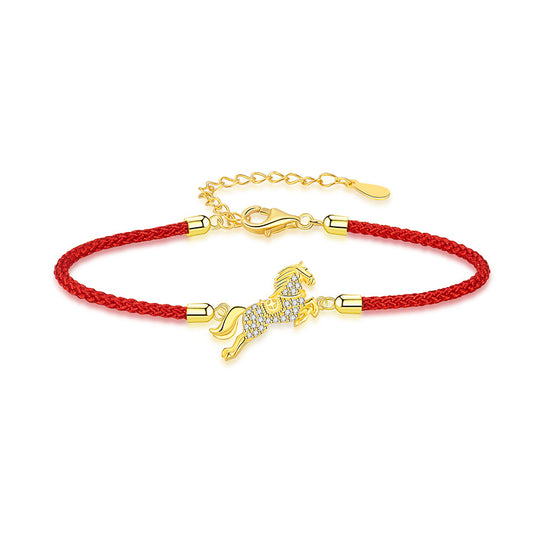
Every year has an elemental nuance. 2026 is the Year of the Fire Horse (Bing Wu). The Horse is a symbol of travel, competition, and freedom. The Fire element adds charisma and volatility.
How this changes the traditions:
- Travel is Lucky: Unlike the introspective Ox or Rabbit years, the Horse encourages movement. Taking a trip during the New Year holiday is considered auspicious in 2026.
- Wear Red AND Green: While Red is the standard lucky color, Green (Wood element) feeds the Fire of the Horse. Incorporating green into your New Year decorations creates a harmonious cycle of energy.
- Career Focus: The Horse is a worker. Prayers and rituals related to career advancement (praying to General Guan Yu or the God of Wealth) are expected to be particularly potent this year.
Frequently Asked Questions
Why is the "Fu" character hung upside down?
You will often see the character 福 (Fu), meaning "Fortune," hung upside down on doors. In Chinese, the word for "Upside Down" (Dao) sounds exactly like the word for "Arrive" (Dao). So, saying "Your Fu is upside down" sounds like "Your Fortune has arrived."
Can I buy my own Red Envelopes?
Yes, you buy the empty envelopes yourself to give to others. However, you should not give a Red Envelope to yourself. If you are unmarried, you simply wait to receive them from elders and married couples.
What if I accidentally break a dish on New Year's Day?
Breaking a dish is considered an omen of "broken" wealth. However, there is a remedy. You must immediately say "Sui Sui Ping An" (岁岁平安). This phrase means "Peace and safety every year," but the word for "Year" (Sui) sounds like the word for "Shattered" (Sui). It turns the accident into a pun for safety. Wrap the broken pieces in red paper before throwing them away after Day 5.
Are Chinese New Year and Lunar New Year the same?
Essentially, yes, but "Lunar New Year" is the more inclusive term used globally, as the festival is also celebrated in Vietnam (Tet) and Korea (Seollal). However, the specific traditions mentioned in this guide (like the specific taboos and food puns) are distinctly Chinese.
Conclusion: Carrying the Light Forward
Chinese New Year traditions are more than just superstitions; they are a cultural glue that binds generations together. They remind us to honor our ancestors, cherish our families, and approach the future with optimism.
As we step into the energetic arena of the 2026 Fire Horse, these rituals serve as our grounding rod. Whether you are hanging a lantern, eating a dumpling, or handing a crisp red bill to a child, you are participating in a ritual that has sustained hope for millennia. May your Year of the Horse be filled with the vigor of the dragon and the spirit of the steed.
Gong Xi Fa Cai! (Wishing you prosperity!)
Get the latest updates on new products, exclusive offers, and more