


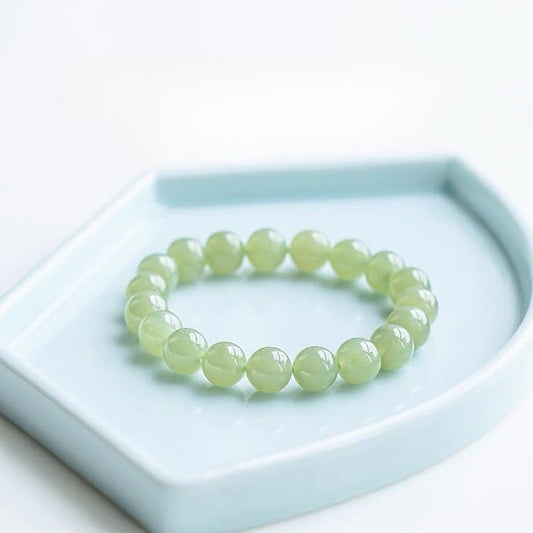
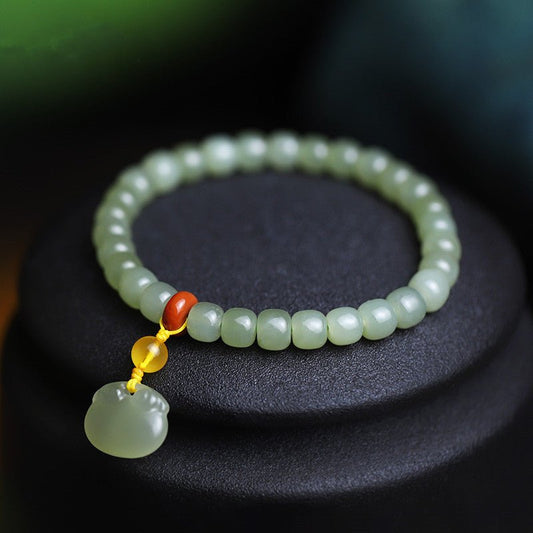
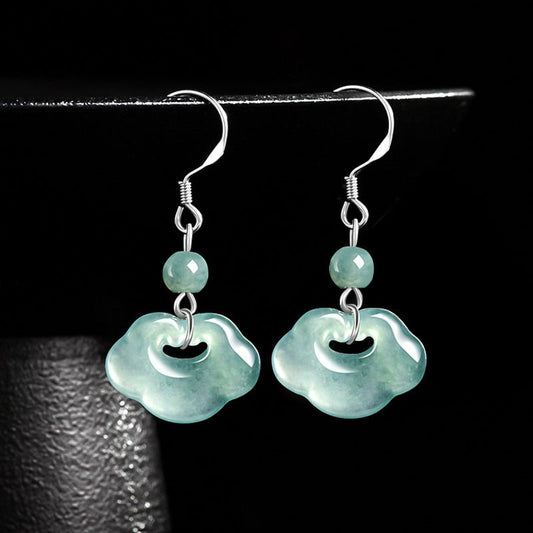




The History of the Pingan Kou: China's Most Beloved Lucky Charm

"Gold has a value; jade is invaluable. For millennia, the Pingan Kou has silently rested against the hearts of millions, offering a simple yet profound promise: safety, balance, and everlasting peace."
When you explore the vast, shimmering world of traditional Chinese jewelry, one specific design inevitably captures the eye and the heart. It is not an intricate dragon carved with meticulous detail, nor is it a complex phoenix wrapped in gold. It is an elegantly simple, perfectly smooth, donut-shaped stone. This unassuming yet deeply revered ornament is known as the Pingan Kou. Translated literally, "Ping An" means peace and safety, while "Kou" refers to a button or clasp. Together, the Pingan Kou is the ultimate "Peace Button," serving as China's most beloved lucky charm and protective talisman for thousands of years.
But what is it about this minimalist circle of jade that has allowed it to endure through the rise and fall of countless dynasties? The history of the Pingan Kou is not merely a tale of jewelry; it is a profound reflection of Chinese philosophical thought, ancient spiritual practices, and the fundamental human desire for protection in an unpredictable world. From its majestic origins as a sacred ritual object used by Neolithic shamans to communicate with the heavens, to its modern status as a fashionable and meaningful gift exchanged between loved ones, the Pingan Kou has a story as rich and deep as the stone from which it is carved.
In this comprehensive guide, we will journey through time to uncover the fascinating history of the Pingan Kou. We will explore the deep Feng Shui meaning behind its iconic shape, how the materials used to craft it evolved from ancient Hetian Nephrite to vibrant Burmese Jadeite, and why, even in our hyper-modern digital age, this ancient symbol remains a powerful conduit for good luck, safety, and inner tranquility.
The Ancient Origins: From the Sacred 'Bi' Disc to the Pingan Kou
To truly understand the Pingan Kou, we must turn back the clock over five thousand years to the Neolithic period in ancient China. The Pingan Kou did not simply appear as a piece of casual jewelry. It evolved from one of the most sacred and important ritual artifacts in early Chinese civilization: the Bi disc (璧).
The Liangzhu Culture (c. 3400–2250 BC)
Archaeological excavations in the Yangtze River Delta have unearthed thousands of ancient jade artifacts from the Liangzhu culture. Among the most prominent are the large, flat jade discs with a hole in the center—the Bi discs. These were not decorative; they were highly sacred objects placed on the chests and abdomens of deceased elites to guide their spirits and protect them in the afterlife.
Worshipping the Heavens
In ancient Chinese cosmology, there was a fundamental belief described as "Heaven is round, Earth is square" (天圆地方). The Bi disc, with its perfect circular shape, was the physical embodiment of the heavens. High priests, shamans, and eventually Emperors used large jade Bi discs during grand sacrificial ceremonies to communicate with the gods, ask for favorable weather, and secure the mandate of heaven.
For centuries, the Bi disc was exclusively reserved for royalty, high-ranking nobility, and religious leaders. It was a symbol of absolute power, divine connection, and spiritual authority. The size and quality of the jade Bi a person owned directly correlated to their societal rank. The Book of Rites (Liji), a collection of texts describing the social forms and ceremonies of ancient China, specifically dictates how and when these jade discs should be used in state rituals.
So, how did a massive, heavy stone used for state religion transform into the delicate Pingan Kou worn around the neck? The evolution was gradual and deeply tied to the philosophical shifts in Chinese society. As dynasties progressed from the Shang to the Zhou, and eventually into the Han Dynasty (202 BC – 220 AD), the rigid, exclusive rules surrounding jade ownership began to soften slightly. The concept of personal protection and individual spirituality began to take root alongside state-sponsored religion.
People desired the divine protection and heavenly connection that the Bi disc offered, but carrying a heavy, ten-inch stone disc was utterly impractical for daily life. Artisans began miniaturizing the Bi disc. They smoothed the sharp edges, rounded the outer and inner rims, and made them small enough to be tied to a belt, hung from a sash, or worn close to the heart on a silk cord. This miniaturized, wearable version of the sacred Bi disc eventually became known as the Pingan Kou. By wearing it, an individual was essentially carrying a small piece of "heaven" with them, ensuring that the protective gaze of the cosmos was always upon them.
The Meaning Behind the Shape: Why is the Pingan Kou Round?
At first glance, the Pingan Kou appears remarkably simple—perhaps even overly simplistic compared to the intricate dragons, phoenixes, and lotus flowers commonly seen in Chinese jade carving. However, in traditional Chinese aesthetics and philosophy, profound meaning is often hidden within the simplest forms. The design of the Pingan Kou is a masterclass in symbolism, representing harmony, balance, and the relationship between the individual and the universe.
-
The Outer Circle: The Macrocosm and the Universe The large, smooth outer circle of the Pingan Kou represents the vastness of the universe, the heavens, and the external world. It symbolizes the chaotic, unpredictable, and infinite nature of the cosmos that surrounds us all. Its infinite loop represents the cyclical nature of time, seasons, and life itself, without a beginning or an end.
-
The Inner Circle: The Microcosm and Inner Peace The smaller, empty hole in the center represents the individual's inner world, their soul, and their personal state of mind. By keeping the center empty and open, it suggests a state of clarity, peace, and unburdened consciousness. It implies that true safety and peace (Ping An) come from within, regardless of the chaos in the external universe.
-
The Philosophy of Zhong Yong (The Golden Mean) The smooth, rounded edges of both the inner and outer circles embody the Confucian doctrine of the Mean (Zhong Yong). This philosophy advocates for balance, moderation, and harmony. The Pingan Kou has no sharp edges or jagged points; it teaches the wearer to navigate life's challenges smoothly, to be flexible rather than rigid, and to maintain a well-rounded, balanced approach to relationships and hardships.
Furthermore, the physical act of wearing a Pingan Kou is symbolic. As the jade rests against the wearer's chest, specifically over the heart or the sternum, it is believed to act as a metaphysical shield. In traditional Chinese medicine and Feng Shui, jade is a "living" stone that contains vital life force energy (Qi). It is believed that the jade absorbs the wearer's negative energy while simultaneously infusing the body with cool, calming, and purifying vibrations. Over years of wear, a genuine jade Pingan Kou will absorb the natural oils of the skin, becoming more translucent, glowing, and uniquely attuned to its owner—a phenomenon often described as the jade and the wearer nurturing each other.
The Evolution of Pingan Kou Materials Through the Dynasties
While the shape of the Pingan Kou has remained remarkably consistent over thousands of years, the materials used to craft it have evolved significantly. This evolution reflects changing trade routes, imperial tastes, and geological discoveries throughout China's long history. Understanding the material is crucial to appreciating the history of the Pingan Kou, as the stone itself carries just as much cultural weight as the shape.
The Era of Nephrite (Hetian Jade)
For the vast majority of ancient Chinese history, from the Neolithic period through the Ming Dynasty, "jade" strictly referred to Nephrite (软玉). The most highly prized Nephrite came from the Kunlun Mountains in the far western region of Xinjiang, primarily from the area around the oasis town of Hetian (Khotan). Transported along the dangerous Silk Road, this Hetian jade was incredibly difficult to acquire, making it astronomically expensive.
Hetian jade is famous for its dense, opaque, and waxy luster. The ultimate ideal was "mutton-fat jade" (羊脂白玉), a flawless, creamy white stone that felt almost like polished wax to the touch. Emperors, scholars, and literati preferred Nephrite for their Pingan Kou amulets because its subtle, understated, and gentle appearance perfectly mirrored the Confucian virtues of modesty, benevolence, and quiet strength. Confucius himself equated the properties of Nephrite to human virtues, stating that its smooth gleam represents humanity, its inner strength represents wisdom, and its pure sound when struck represents music.
The Rise of Jadeite (Feicui)
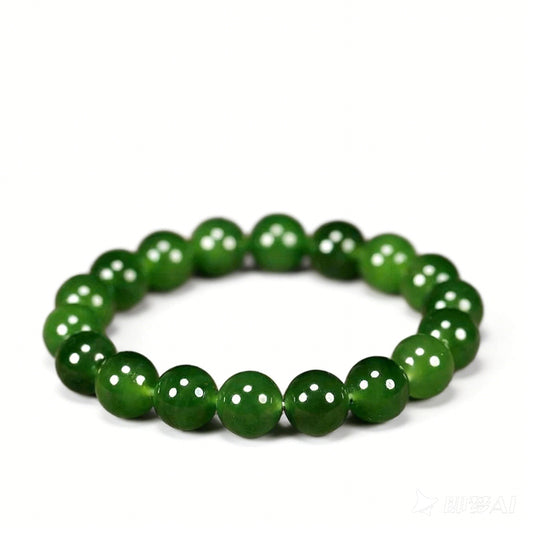
The history of the Pingan Kou experienced a massive, colorful shift during the late Qing Dynasty (1644–1912). A new type of stone began flowing into China from neighboring Burma (modern-day Myanmar): Jadeite (硬玉 or Feicui). Unlike the muted, subtle Nephrite, Jadeite offered a glassier, highly translucent finish and came in a dazzling array of colors, most notably vivid, emerald-like greens, icy lavenders, and honey yellows.
The popularity of Jadeite exploded thanks to Empress Dowager Cixi, the de facto ruler of China in the late 19th century. She was utterly obsessed with vibrant green Burmese Jadeite. Her imperial patronage elevated Jadeite above Nephrite in terms of luxury and desire. The Pingan Kou crafted during this era transformed from a quiet symbol of scholarly virtue into a stunning, eye-catching piece of high-status jewelry. Today, "Imperial Green" Jadeite Pingan Kou pendants are among the most expensive and sought-after gems at global auction houses like Sotheby's and Christie's.
While Nephrite and Jadeite remain the undisputed kings of Pingan Kou materials, the modern era has democratized this lucky charm. Today, artisans carve the Pingan Kou from a wide variety of semi-precious stones and metals, allowing people of all budgets to enjoy its protective benefits.
- Agate and Carnelian: Popular for their warm red and orange tones, believed to boost vitality and blood circulation in traditional medicine.
- Obsidian: A dark volcanic glass highly prized in Feng Shui for its powerful ability to absorb negative energy and ward off evil spirits. A popular choice for men.
- Amber and Beeswax (Mila): Lightweight and glowing with golden warmth, these fossilized resins are favored for their soothing properties.
- 24K Solid Gold: Often gifted to newborn babies, a small gold Pingan Kou represents wealth, purity, and a life free from hardship.
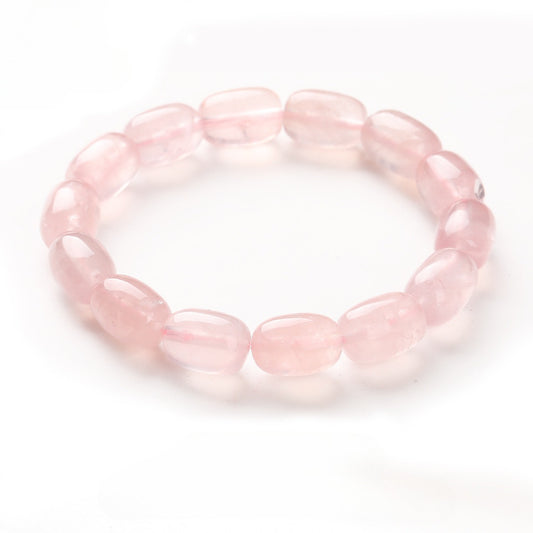
- Crystal and Quartz: Used for modern, fashionable interpretations, clear and rose quartz Pingan Kou are popular among younger generations for attracting love and clarity.
How the Pingan Kou Became China's Ultimate Lucky Charm
The transition of the Pingan Kou from an exclusive royal artifact to a widespread cultural phenomenon is a fascinating study in sociology and folklore. During the Ming (1368–1644) and Qing (1644–1912) dynasties, China experienced a massive boom in commerce, trade, and the rise of a wealthy merchant class. As people began traveling more extensively for business along treacherous mountain roads and bandit-ridden rivers, the need for spiritual reassurance grew exponentially.
The merchants could not carry large statues of deities with them, but they could carry a small piece of jade. The Pingan Kou became the ultimate traveler's companion. Wives and mothers would secure a jade Pingan Kou around the necks of their husbands and sons before a long journey. The talisman served a dual purpose: it was a physical reminder of the love and prayers of the family waiting at home, and it was a spiritual shield against accidents, illnesses, and misfortune on the road. The name "Peace Button" solidified during this era, as the literal fastening of the amulet around the neck was seen as "buttoning up" one's safety.
In the realm of Feng Shui, the Pingan Kou holds a position of supreme importance. Feng Shui masters advocate for the presence of circular shapes in living spaces and on the body to promote the smooth, uninterrupted flow of "Qi" (life energy). Sharp angles (known as "poison arrows" in Feng Shui) create hostile, stagnant energy. The flawless, infinite curve of the Pingan Kou continuously circulates positive energy, acting as an energetic filter that deflects malice and attracts auspicious vibrations.
Cultural Folklore: The "Cracked" Jade
A deeply held belief in Chinese culture is that if a jade Pingan Kou suddenly cracks, chips, or shatters while you are wearing it, it has done its job. The jade is believed to have "taken the hit" or absorbed a disastrous event, accident, or negative spiritual attack that was meant for the wearer.
When this happens, the broken jade is never thrown away casually. It is usually wrapped in red cloth and buried or kept in a safe drawer out of respect and gratitude for its protective sacrifice.
The Pingan Kou in Modern Times: More Than Just History
One might assume that in the fast-paced, technology-driven world of the 21st century, ancient talismans would lose their relevance. Yet, the Pingan Kou has never been more popular. Its survival is due entirely to its minimalist, timeless design. Unlike intricate, overtly traditional carvings that might look out of place with modern fashion, the clean, geometric lines of the Pingan Kou pair effortlessly with a simple white t-shirt, a business suit, or an elegant evening gown.
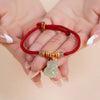
Modern jewelers have elevated the Pingan Kou to high fashion. While purists still wear it on a simple red or black braided silk cord, contemporary designers frequently set the jade donut in 18K white gold, surrounding it with halos of brilliant-cut diamonds. They are incorporated into asymmetrical earrings, minimalist bracelets, and chic brooches. High-end luxury brands have even adopted the motif, recognizing its universal appeal and profound cultural resonance.
Beyond fashion, the gifting culture surrounding the Pingan Kou remains robust. It is the quintessential gift for life's most vulnerable and important transitions:
- For Newborn Babies: Grandparents frequently gift a tiny jade or gold Pingan Kou to a newborn infant to protect them from "evil eyes" and childhood illnesses, ensuring a safe passage into life.
- For Students: Given before major national exams (like the Gaokao) to calm the mind, ward off anxiety, and promote a smooth, peaceful testing experience.
- For Drivers: It is incredibly common to see a larger Pingan Kou, adorned with traditional red tassels and lucky knots, hanging from the rearview mirror of a car in China, serving as a talisman for safe travels on the highway.
- For Elders: Gifted during the Lunar New Year or on milestone birthdays to bless elderly parents with peace, health, and a tranquil twilight of life.
Buying Guide: How to Choose an Authentic Jade Pingan Kou
If the rich history of the Pingan Kou has inspired you to acquire one for yourself or a loved one, navigating the modern jade market can be daunting. Because jade is so highly prized, the market is flooded with imitations, synthetics, and chemically treated stones. If you are buying a Pingan Kou specifically for its historical, spiritual, and Feng Shui properties, ensuring the stone is natural and authentic is paramount. According to crystal healing and Feng Shui principles, chemically treated or fake jade possesses no life force energy (Qi) and offers no protective benefits.
Beware of Treated Jade (Type B and Type C)
In the Jadeite market, stones are graded by their treatment levels. You must always insist on Type A Jadeite.
- Type A: 100% natural jade. It has only been carved and polished with natural plum juice or beeswax. It retains all its natural energy and value.
- Type B: Poor quality jade that has been bleached with strong acids to remove impurities, then injected with polymer resins to make it look clear and translucent. Its internal structure is destroyed.
- Type C: Jade that has been dyed artificially to mimic high-value colors like Imperial Green or Lavender. The dye will fade over time, and the chemicals can irritate the skin.
Always ask for a reputable gemological certificate (such as an NGTC certificate in China, or GIA globally) when purchasing high-value jade jewelry to guarantee it is Type A.
When selecting your piece, look for a Pingan Kou that feels heavy and cool to the touch. Authentic jade has a high specific gravity, making it feel denser than glass or plastic of the same size. If you tap two pieces of genuine jadeite together, they will produce a sharp, clear, musical chime, whereas treated jade or plastic will emit a dull, flat thud.
Don't be overly obsessed with perfection unless you have a limitless budget. Natural, untreated jade will often have tiny internal inclusions, slight color variations, or "cotton" (white, cloud-like formations inside the stone). These imperfections are the fingerprints of nature, proving the stone's authenticity and connecting it to the earth from which it was mined over millions of years. Choose a color that speaks to you personally—whether that is the icy, ethereal white of Nephrite or the vibrant, lively green of Jadeite.
Frequently Asked Questions About the Pingan Kou
Who can wear a Pingan Kou?
Unlike some cultural amulets or specific Feng Shui creatures (like the Pixiu) which have strict rules regarding gender, age, or zodiac signs, the Pingan Kou is entirely universal. It represents fundamental peace and safety, making it suitable for absolutely everyone: men, women, the elderly, and infants. Its mild, balancing energy makes it a safe and universally beneficial talisman.
How should I wear my Pingan Kou?
The most traditional and effective way to wear a Pingan Kou is as a pendant resting on the chest, near the heart chakra. This allows the jade to interact closely with your body's energy field. However, smaller versions are beautifully incorporated into bracelets, which is excellent for circulating energy through the pulse point on the wrist. If you do not wish to wear it, carrying it in a silk pouch in your pocket or hanging it in your car or home is also highly effective for protection.
Does the color of the jade change its meaning?
While the shape always guarantees peace and safety, the color of the jade can add specific secondary benefits. Green jadeite is closely associated with growth, health, and attracting wealth. White nephrite is tied to purity, spiritual clarity, and calming anxiety. Lavender jade is associated with spiritual intuition and emotional healing. Yellow or honey jade represents joy, optimism, and an influx of prosperity.
Can I buy a Pingan Kou for myself, or must it be gifted?
It is perfectly fine to purchase a Pingan Kou for yourself. While receiving one as a gift is deeply meaningful because it comes infused with the sender's blessings and good intentions, buying one for yourself acts as an act of self-love and an intentional commitment to your own peace, safety, and well-being.
Conclusion: A Timeless Circle of Peace
From the grand, smoke-filled sacrificial altars of the Liangzhu culture to the sleek display cases of modern luxury jewelers, the journey of the Pingan Kou is a remarkable testament to the enduring power of cultural symbolism. It has survived the rise and fall of empires, the transition from ancient shamanism to modern philosophy, and the ever-shifting tides of global fashion.
The history of the Pingan Kou teaches us that humanity's deepest desires have not really changed over the past five millennia. Beneath our complex modern lives, we all still seek what our ancestors sought: safety from harm, a quiet mind, and a balanced heart. In a world that often feels chaotic, fast-paced, and unpredictable, the Pingan Kou offers a physical, tangible anchor. It is a daily reminder to find our center, to embody the flexibility of the circle, and to carry a piece of inner peace wherever the road may lead.
Do you own a piece of jade jewelry? Explore our extensive collections to find the perfect, authentic Pingan Kou that resonates with your spirit, and bring a millennia-old tradition of peace into your modern life today.